I started a family tree from Find a Grave.
My friend Kim found my cousin Ronda’s family tree on Ancestry and put us in touch. Ronda had spent years on it. She plans to cancel her subscription. When she does, the tree goes with it.
In June I offered to build her a website. She said “GO!” Then nothing happened for four months.
On November 9 she sent me the file. Ancestry exports a tree as a GEDCOM, a text format older than the web. Hers had both sides of her family, about 1,500 people. A script kept the Halley side, 828 people, and left out the living. That evening it was a website, one page per person. On the 20th it went public at alanhalley.com/family. The same afternoon it became a map. On November 23 it became a tree.
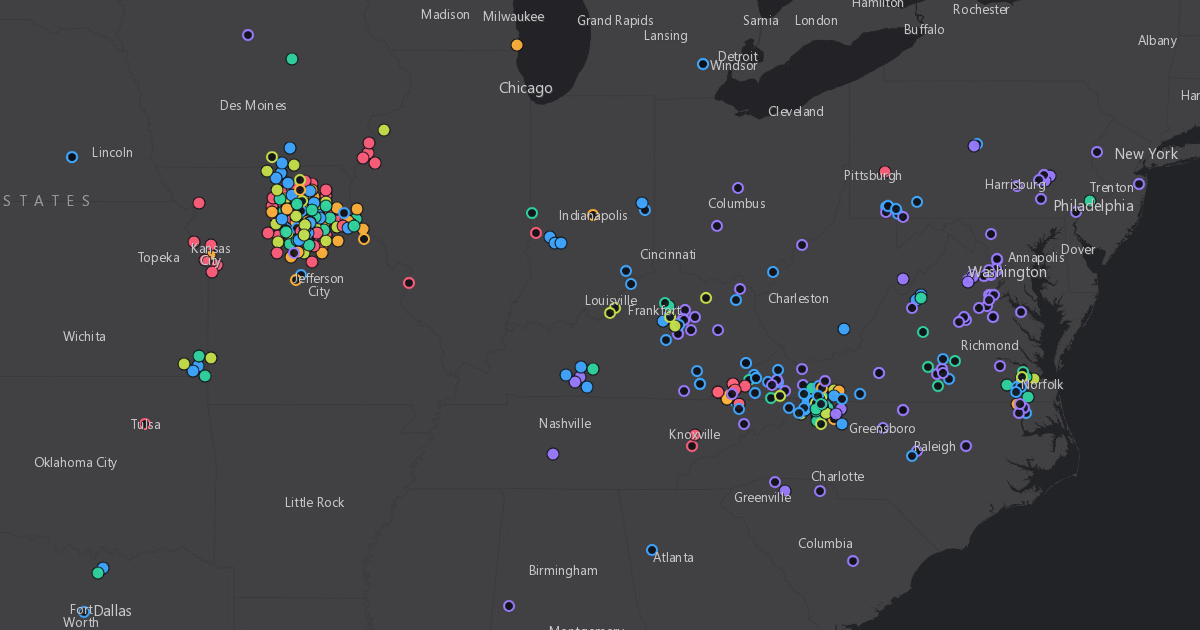
The map
The dots sit at town centers, not cemeteries. The tree records towns. One burial is missing. Charlotte Sexton died in 1878, and her burial place is recorded as “USA.”
Note the hollow rings. People with no recorded burial place are shown where they died; 211 of them. That took the map from 233 dots to 444, and pushed its first year back from 1758 to 1655. I think that the map is more entertaining with the hollow circles. And I built it just so I could get a sense of the family migrating through the years.
The tree
Ancestry draws a tree you can click through: parents above, children below. I wanted that, so I built one. It opens on William Lloyd Halley, my father’s father.
Why not Ancestry
I decided to build my own tree rather than pay Ancestry.com to view Ronda’s tree.
The family history essays:
- 1. Family Tree Research With AI
- 2. Henry and Polly
- 3. The High Road
- 4. Halley Family Migration Map
- 5. Why Missouri?
Related: